
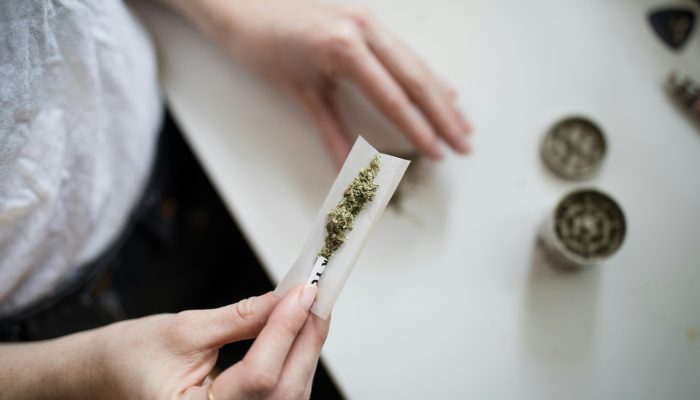
The Supreme Court hears arguments Monday in an important gun case that has united an array of strange bedfellows, from conservative gun rights groups to liberal civil liberties groups. At issue is a federal law making it a crime for drug users to possess a firearm. It’s the same law that was used to prosecute then-President Joe Biden’s son for illegal gun possession — only this case involves marijuana use and gun ownership.
The briefs in the case present diametrically different versions of the facts. On one side, the Trump administration portrays Ali Danial Hemani as a drug dealer and someone with terrorist ties and a marijuana habit. Importantly, he is not being prosecuted for any of those offenses, however. Rather, the government has charged Hemani with violating a federal gun law that bars drug addicts from possession of firearms, a crime punishable by up to 15 years in prison.
The 5th U.S. Circuit Court of Appeals threw out the indictment, declaring that the federal law violates Hemani’s Second Amendment right to own a gun.
The Justice Department appealed to the Supreme Court, arguing that because Hemani admitted to FBI agents that he used marijuana several times a week, he is a “persistent” drug user, thus rendering illegal the possession of the gun he bought legally and keeps securely in his home.
Hemani’s lawyer, law professor Naz Ahmad of the City University of New York, paints a very different picture of her client. Hemani, she notes, was born and raised in Texas, “attended high school there, played on the high school football team, attended the University of Texas at Arlington, was an honor student there” and is “a really valued member of his local religious community.”
“The Second Amendment doesn’t support disarming and prosecuting somebody for mere possession of a firearm if they happen to have used marijuana occasionally,” she says.
“That’s a mismatch,” she adds, especially at a time when 40 states, to one degree or another, have legalized marijuana use.
You can read the full article at NPR.